
If you’ve ever wondered how long is 300 feet, you’re definitely not alone. Numbers like 300 feet can sound clear on paper, but once you try to picture them in real life, things get confusing. Without a visual reference, distances often feel abstract, especially when they’re larger than everyday objects but smaller than a mile. Our brains simply don’t hold onto numbers very well unless we connect them to something familiar.
This confusion shows up in many practical situations. You might see “300 feet” mentioned in property listings, safety rules, construction plans, hiking trails, or even product descriptions. People often nod along as if they understand, but deep down, they’re not fully sure how far that actually is. And since most of us don’t carry measuring tapes or walk around counting steps, it’s easy to misjudge the size.
That’s why this guide exists. In this article, you’ll learn exactly how long 300 feet is, how it compares to everyday objects and places, and how it feels in real life. By the end, you won’t just know the number—you’ll be able to picture it clearly and estimate it confidently whenever you need to.
What Exactly Is 300 Feet?
Three hundred feet is a unit of length in the imperial measurement system, commonly used in the United States and a few other countries. It represents a medium-to-long distance—far longer than most household measurements, but still short enough to walk in under a minute.
To make this clearer, here are accurate conversions for 300 feet:
300 feet equals 3,600 inches.
300 feet equals 100 yards.
300 feet equals approximately 91.44 meters.
300 feet equals about 0.091 kilometers.
300 feet equals roughly 0.057 miles.
In real life, 300 feet is often used to describe distances between buildings, safety clearances, road features, sports fields, walking distances, and construction layouts. It’s also a common measurement in zoning rules, parking layouts, and event planning.
How Big Does 300 Feet Feel in Real Life?
Understanding how long is 300 feet becomes much easier when you think about how it feels to move through that distance. For most people, walking 300 feet at a normal pace takes about 60 to 75 seconds. It’s long enough to notice but short enough that it doesn’t feel tiring.
If you’re standing at one end of a 300-foot distance, you can clearly see the other end, but details may not be sharp. People at that distance are visible, but facial features are hard to make out. It feels like the length of a large open space rather than a small room or short path.
In daily life, 300 feet often feels like walking from one end of a parking lot to the other, crossing a large plaza, or moving between buildings in a school, hospital, or shopping complex.
See Also: How Long Is 20 Feet? Clear Guide With Real Examples
Real-Life Examples That Help You Visualize 300 Feet
Below are everyday, real-world examples that make it much easier to picture how long 300feet really is. Each example connects the measurement to something familiar, so your brain can lock onto the size naturally.
1: A Football Field Without End Zones

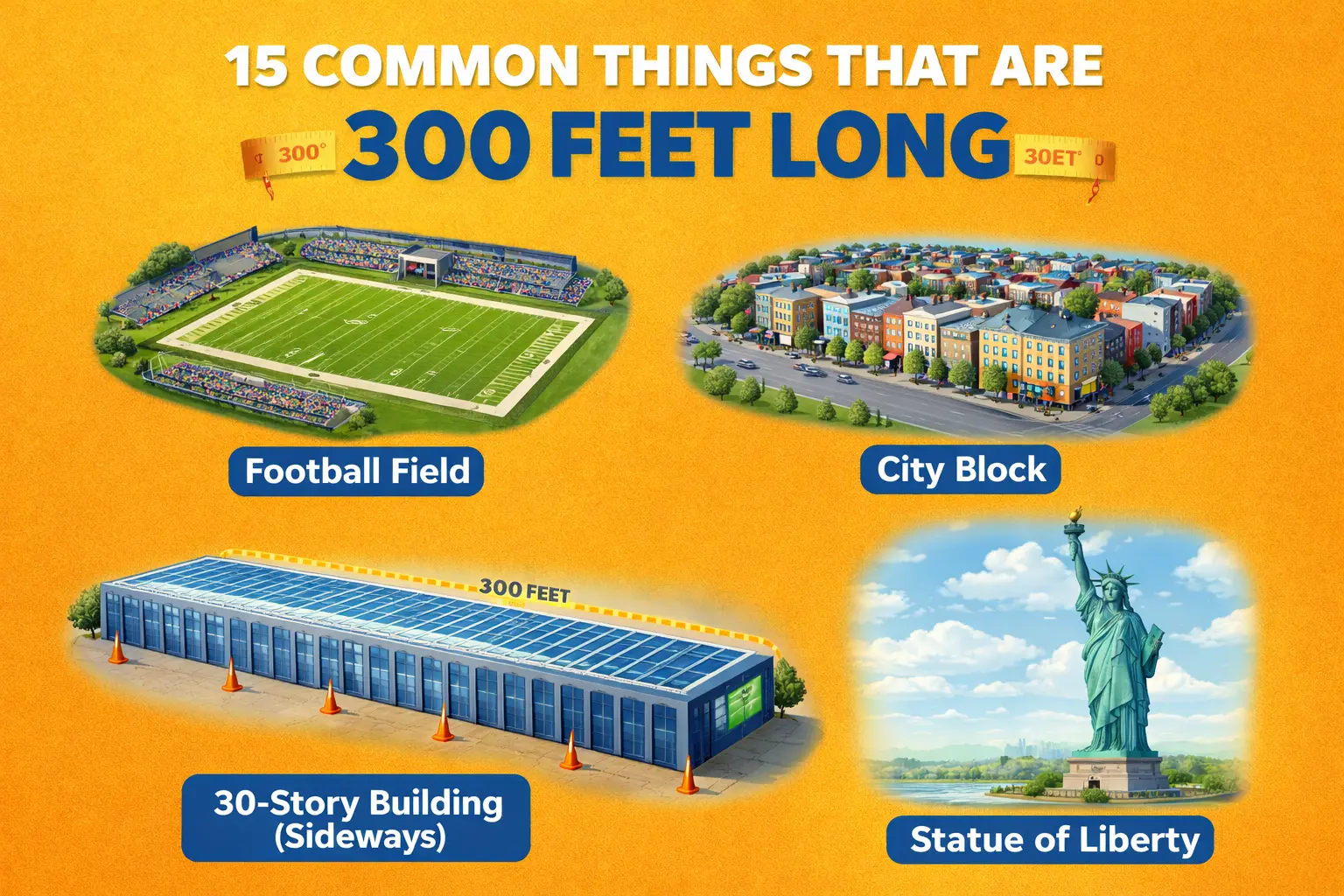
A standard American football field is 360 feet long including end zones. If you remove both end zones, the remaining playing area is exactly 300feet. This makes it one of the best visual references. If you’ve ever watched or played football, imagine walking from one goal line to the other without stepping into the end zones.
2: One City Block in Many Urban Areas

In many cities, a single city block is close to 300feet long. While block sizes vary, this distance is commonly used in urban planning. Walking one block in a downtown area often gives you a very close feel for how long 300 feet is.
3: The Length of a Large Parking Lot
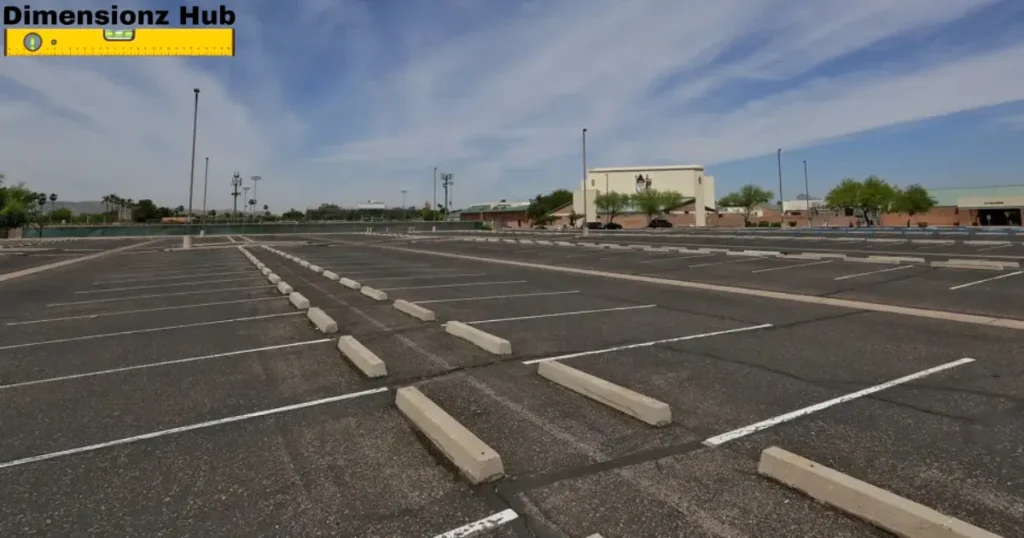
Many supermarket or mall parking lots are around 250 to 350 feet from one end to the other. Walking from the farthest parking spot to the entrance is often close to 300feet, which is why it feels like a short walk but not an instant one.
4: A Soccer Field’s Width
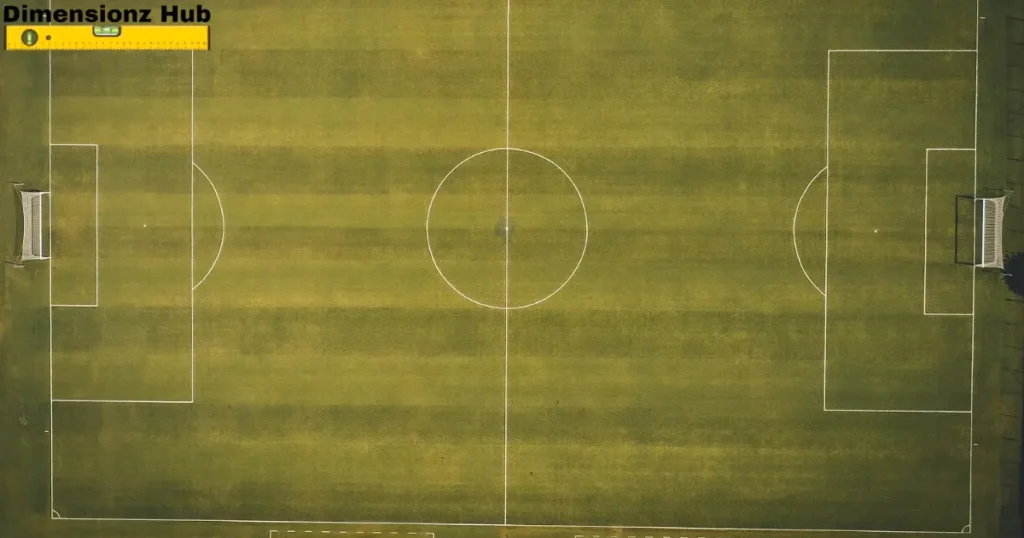
A standard soccer field is typically between 210 and 240 feet wide, but larger professional fields can approach 300feet. Standing on one sideline and looking across to the other gives a strong sense of this distance.
5: Three Olympic Swimming Pools End to End

An Olympic swimming pool is 164 feet long. Lining up nearly two pools gets you close, but imagining three pools end to end helps exaggerate the feeling and lock in the scale of 300 feet in your mind.
6: A Tall Skyscraper Laid on Its Side

A 30-story building is often around 300 feet tall. Imagining that building lying flat on the ground gives a powerful visual. It instantly shows that 300feet is far longer than it sounds.
7: A Commercial Airplane Wingtip to Wingtip

Many large passenger airplanes have wingspans close to 200 feet. One and a half airplane wingspans side by side get you very close to 300feet, helping aviation fans visualize the distance clearly.
8: A School Hallway Stretch

Large schools often have long hallways that stretch close to 300feet from one end to the other. Walking that hallway between classes gives a perfect real-life sense of the distance.
9: A Hotel Corridor

In big hotels or convention centers, long corridors can reach or exceed 300feet. If you’ve ever walked down one and thought it felt long but manageable, that’s the exact feeling of this measurement.
10: A Construction Crane Boom

Many medium-sized construction cranes have booms that reach around 300 feet. Seeing one extend across a job site gives a dramatic and accurate sense of scale.
11: The Length of a Large Warehouse Section

Warehouses often divide space into sections of about 300 feet. Standing at one end and looking across the floor shows how wide-open and expansive this distance feels indoors.
12: A Hiking Trail Marker Distance
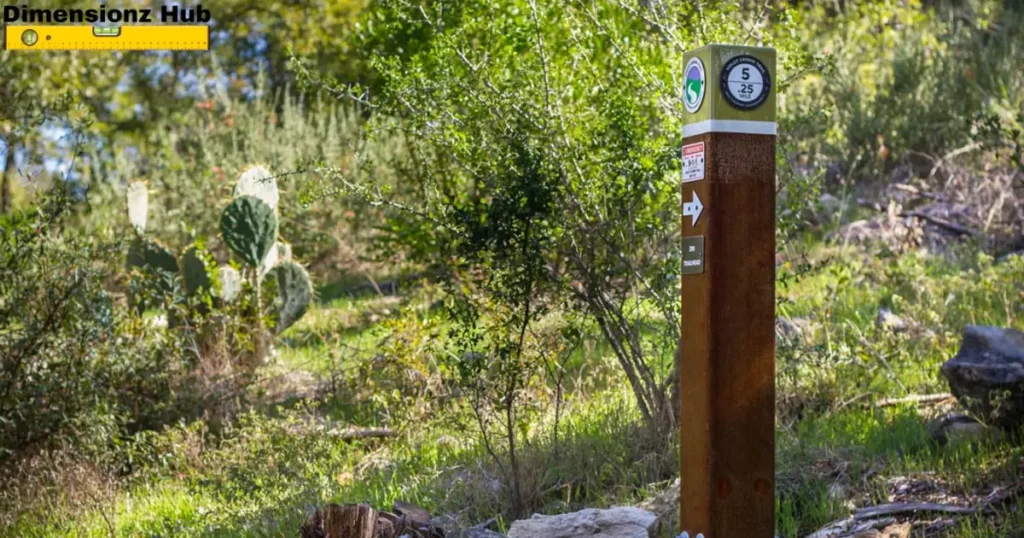
Trail signs often mark distances in hundreds of feet near viewpoints or rest areas. A 300-foot walk on a trail feels short but noticeable, especially on uneven terrain.
13: A Runway Taxi Distance

Small airport taxiways often measure distances in 300-foot increments. Pilots and ground crews use this measurement to position aircraft precisely.
14: A Cruise Ship Deck Section

On large cruise ships, walking from one section of the deck to another can easily reach 300feet. It feels like a decent walk but not exhausting.
15: A Row of Ten Standard Houses
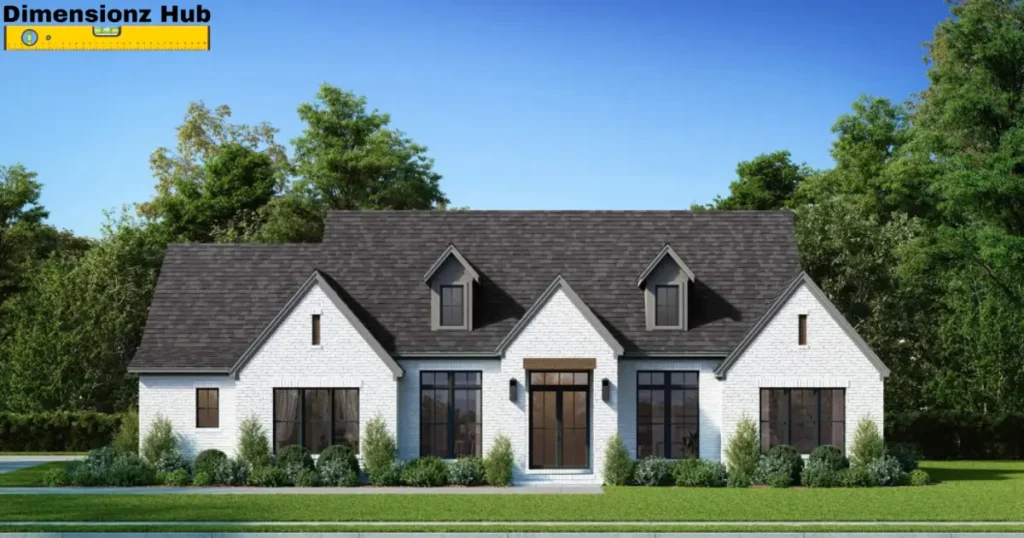
If each house lot is about 30 feet wide, ten houses in a row equal roughly 300 feet. This example is especially useful in residential areas.
How to Measure 300 Feet Without a Ruler
You won’t usually need to measure 300 feet precisely, but estimating it can be very helpful. Here are practical ways to do that without tools.
One average adult step is about 2.5 feet. That means 300feet is roughly 120 normal walking steps. Counting steps while walking is one of the easiest estimation methods.
Another method is using yards. Since 300feet equals 100 yards, you can imagine a football field marked in yards and count across it mentally.
You can also use time. Walking at a normal pace for about one minute usually covers close to 300feet. This method is surprisingly accurate for quick estimates.
Comparing 300 Feet to Other Measurements
Compared to smaller distances like 10 or 20 feet, 300feet feels massive. It’s the difference between crossing a room and crossing an entire open area.
Compared to 100 feet, 300feet is three times longer. A distance that might take 20 seconds to walk suddenly takes a full minute.
Compared to a mile, 300feet is relatively short. A mile is 5,280 feet, so 300feet is only a small fraction of that. This comparison helps explain why 300feet feels big locally but small on a map.
Compared to one foot, the difference is dramatic. One foot fits under a chair. Three hundred feet fits buildings, vehicles, and entire crowds.
FAQs
How long is 300 feet in walking time?
For most people, walking 300feet takes about one minute at a normal pace.
Is 300 feet longer than a football field?
It is slightly shorter than a full football field including end zones, but equal to the main playing area.
How far is 300 feet in meters?
Three hundred feet equals approximately 91.44 meters.
Can you see clearly across 300 feet?
Yes, you can see people and objects clearly, but fine details like faces may be hard to distinguish.
Is 300 feet considered a long distance?
It depends on context. Indoors or in a parking lot, it feels long. Outdoors or on a trail, it feels moderate.
How many steps is 300 feet?
It’s about 120 steps for the average adult, depending on stride length.
Is 300 feet used in safety rules?
Yes, it’s commonly used for safety clearances, zoning laws, and construction guidelines.
See Also: How Long Is 40 Inches? Real-Life Size Explained
Conclusion
Understanding how long is 300 feet becomes much easier once you stop thinking in numbers and start thinking in real-life spaces. Whether you imagine a football field, a city block, or a long parking lot, these familiar references turn an abstract measurement into something concrete and memorable. Instead of guessing, you can now picture the distance clearly.
With the comparisons, examples, and estimating methods in this guide, 300 feet no longer feels confusing or vague. It’s a distance you can recognize, feel, and estimate with confidence. The next time you see “300feet” mentioned anywhere, you’ll know exactly what it means—and that clarity makes everyday decisions much easier.